
What We Do On Mission Trips
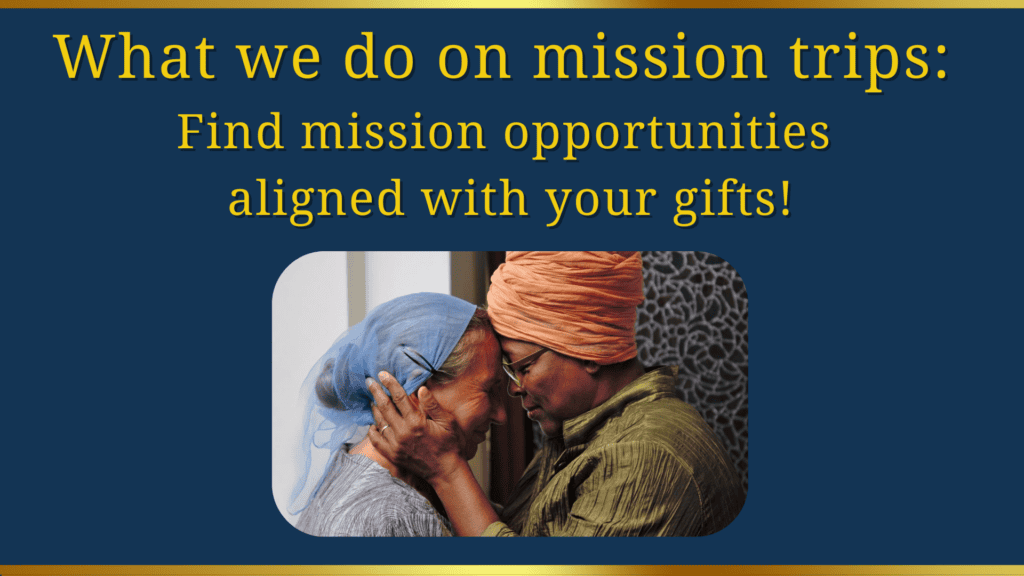
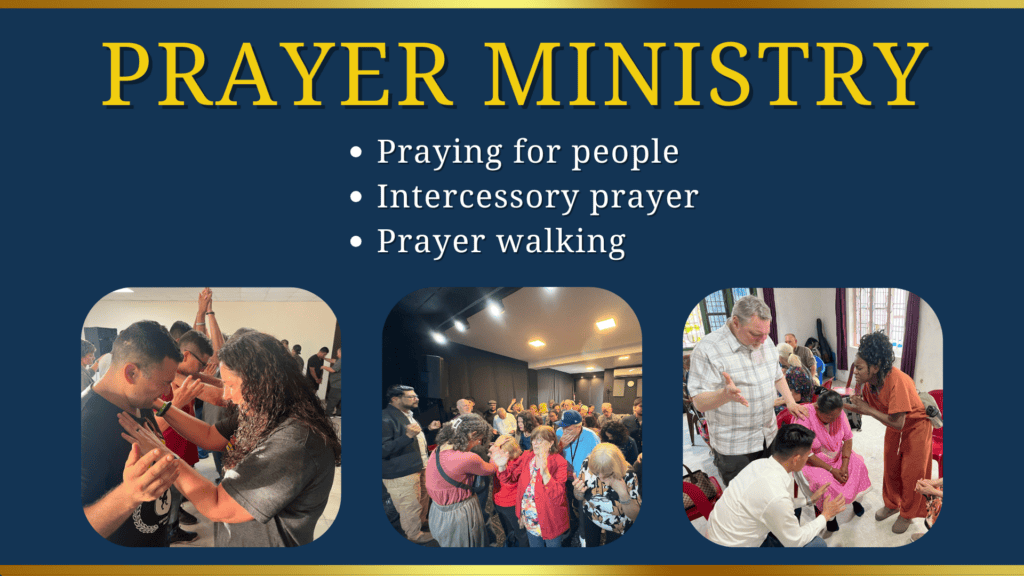
On a mission trip, everyone can participate in prayer ministry, regardless of personality, experience, or language ability. Whether praying aloud, silently, one-on-one, or behind the scenes, prayer is foundational to everything God does through the team.
1. Praying for People (Personal / Direct Prayer)
What it is:
Praying with and for individuals you meet during the mission trip—believers and non-believers alike—often in the moment and in response to a specific need.
What it looks like on a mission trip:
-
Praying with someone after a conversation or outreach event
-
Responding when someone asks, “Can you pray for me?”
-
Praying for physical healing, emotional pain, family needs, fear, or guidance
-
Offering prayer respectfully, even across language and cultural barriers
Why it matters:
-
It demonstrates God’s love in a personal, tangible way
-
It opens hearts to the Gospel
-
It builds trust and shows humility and dependence on God, not ourselves
Helpful guidelines:
-
Be led by the Holy Spirit
-
Pray simply and clearly
-
Ask permission before praying
- Explain what prayer is if a person is unfamiliar
-
Listen before you speak
“Carry each other’s burdens, and in this way you will fulfill the law of Christ.” — Galatians 6:2
2. Intercessory Prayer
What it is:
Standing in the gap and praying on behalf of others—people, communities, ministries, and situations—often before and behind the scenes.
What it looks like on a mission trip:
-
Praying for the local church, pastors, and leaders
-
Covering outreach events, services, and conversations in prayer
-
Praying against spiritual opposition
-
Lifting up the needs of the community (poverty, injustice, violence, sickness)
-
Praying for team unity, protection, and spiritual sensitivity
Why it matters:
-
It prepares spiritual ground before visible ministry happens
-
It invites God’s power and direction into every aspect of the trip
-
Many breakthroughs happen because someone prayed faithfully, even unseen
Helpful guidelines:
-
Faithful and persistent
-
Scripture-based prayer
-
Willingness to pray even when results aren’t immediate
“I urge…that petitions, prayers, intercession and thanksgiving be made for all people.” — 1 Timothy 2:1
3. Prayer Walking
What it is:
Prayer walking is praying on location—walking through neighborhoods, schools, markets, or ministry sites while intentionally praying for what you see and sense.
What it looks like on a mission trip:
-
Walking through a village or city and praying quietly or softly
-
Praying for homes, families, businesses, and schools as you pass them
-
Asking God for insight into the spiritual needs of the area
-
Blessing the community and asking for God’s kingdom to come
Why it matters:
-
It connects prayer directly to place and people
-
It increases spiritual awareness and compassion
-
It aligns the team with God’s heart for the community
Helpful guidelines:
-
Observant and attentive
-
Respectful of culture and space
-
Listening as much as praying
“Every place where you set your foot, I have given you.” — Joshua 1:3
Mission trips to the following countries include this ministry opportunity. Click on the country to find out more about our next mission trip there and how you can be a part of it:
Israel, Athens Greece, Mexico, Egypt, Thessaloniki Greece, Argentina, Thailand, Vietnam, Kazakhstan, Caribbean Nation
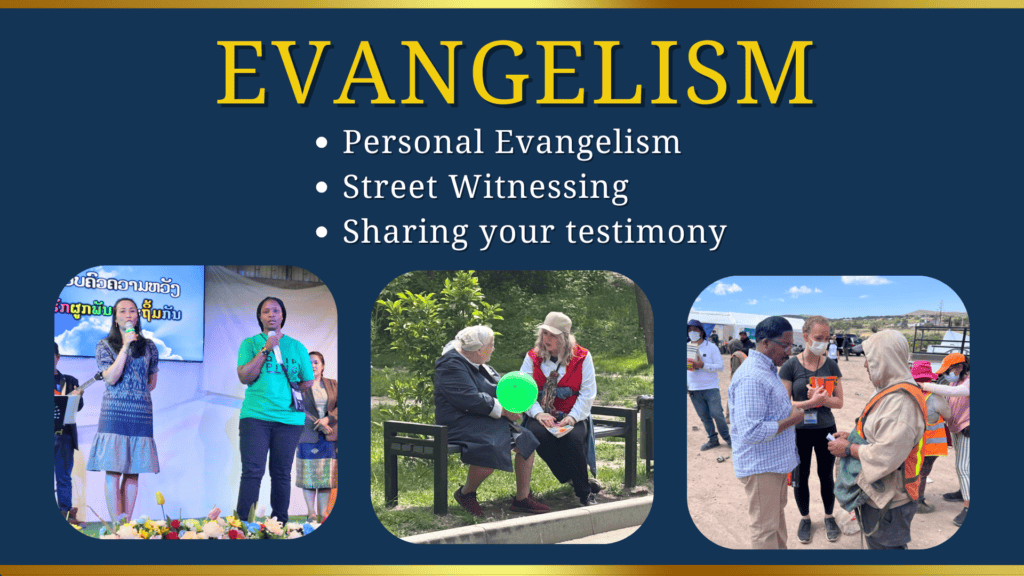
Evangelism on a mission trip is not about having all the answers—it’s about being available, obedient, and loving. God invites us to plant seeds, water what has already been planted, and trust Him for the growth.
“One plants, another waters, but God gives the increase.” — 1 Corinthians 3:6
What evangelism is:
Evangelism is the intentional sharing of the good news of Jesus Christ—His life, death, and resurrection—and inviting people to respond in faith. On a mission trip, evangelism is rooted in relationship, humility, and dependence on the Holy Spirit, not pressure or performance.
“Go and make disciples of all nations…” — Matthew 28:19
1. Personal Evangelism
What it is:
Personal evangelism is sharing the gospel through one-on-one conversations built on genuine connection and care.
What it looks like on a mission trip:
-
Conversations with locals, those who come to medical clinics, services or other outreach events
-
Listening to people’s stories, beliefs, and questions
-
Naturally sharing who Jesus is and what He has done
- Shering your personal story of coming to Jesus or a testimony of His presence in your life
-
Inviting someone to respond through prayer, faith, or connection to a local church
Why it matters:
-
People are more open when they feel heard and respected
-
The Gospel is best understood in the context of relationship
-
It reflects how Jesus often ministered—person to person
Helful guidelines:
-
Be a good listener before being a speaker
-
Speak truth with gentleness and respect
-
Trust the Holy Spirit to guide the conversation
“Always be prepared to give an answer…with gentleness and respect.” — 1 Peter 3:15
Mission trips to the following countries include this ministry opportunity. Click on the country to find out more about our next mission trip there and how you can be a part of it:
Athens Greece, Mexico, Egypt, Thessaloniki Greece, Argentina, Thailand, Vietnam, Kazakhstan, Caribbean Nation
2. Street Witnessing
What it is:
Street witnessing is sharing the Gospel in public spaces—streets, parks, markets, or community gathering places—often through brief conversations, prayer, or outreach activities.
What it looks like on a mission trip:
-
Initiating respectful conversations with people in public places
-
Offering prayer and spiritual encouragement
-
Participating in organized outreach events or creative evangelism (music, drama, testimonies)
-
Distributing Gospel literature when appropriate and permitted
Why it matters:
-
It reaches people who may never enter a church
-
It allows the Gospel to be proclaimed widely and boldly
-
It requires faith and reliance on God rather than comfort
Helpful guidelines:
-
Be culturally sensitive and respectful
-
Work in teams for accountability and encouragement
-
Know when to engage and when to move on
“How beautiful are the feet of those who bring good news!” — Romans 10:15
Mission trips to the following countries include this ministry opportunity. Click on the country to find out more about our next mission trip there and how you can be a part of it:
Athens Greece, Mexico, Thessaloniki Greece, Argentina, Thailand, Vietnam, Kazakhstan
3. Sharing Your Personal Testimony
What it is:
Your personal testimony is the story of how Jesus has impacted your life—who you were before Christ, how you came to faith, and how He continues to change you. It can also be a story of His divine intervention in your life experience or a personal story that demonstrates the benefits of living a life surrendered to Him. It is helpful to use relevant scripture verses to point your listener to the Word of God.
What it looks like on a mission trip:
-
Sharing your story in conversations, small groups, or outreach events
-
Adapting your testimony to different audiences and time limits
-
Using your story as a bridge to the gospel message
Why it matters:
-
Your story is unique and cannot be argued with
-
It makes the Gospel relatable and personal
-
God uses real stories to draw people to Himself
How to structure a simple testimony:
-
Before Christ – What your life was like
-
Meeting Christ – How you came to know Jesus
-
After Christ – How your life has changed
Helful guidelines:
-
Be honest and authentic, not exaggerated
-
Keep Christ at the center, not yourself
-
Share with humility and gratitude
“They triumphed…by the word of their testimony.” — Revelation 12:11
Mission trips to the following countries include this ministry opportunity. Click on the country to find out more about our next mission trip there and how you can be a part of it:
Israel, Athens Greece, Mexico, Egypt, Thessaloniki Greece, Argentina, Thailand, Vietnam, Kazakhstan, Caribbean Nation
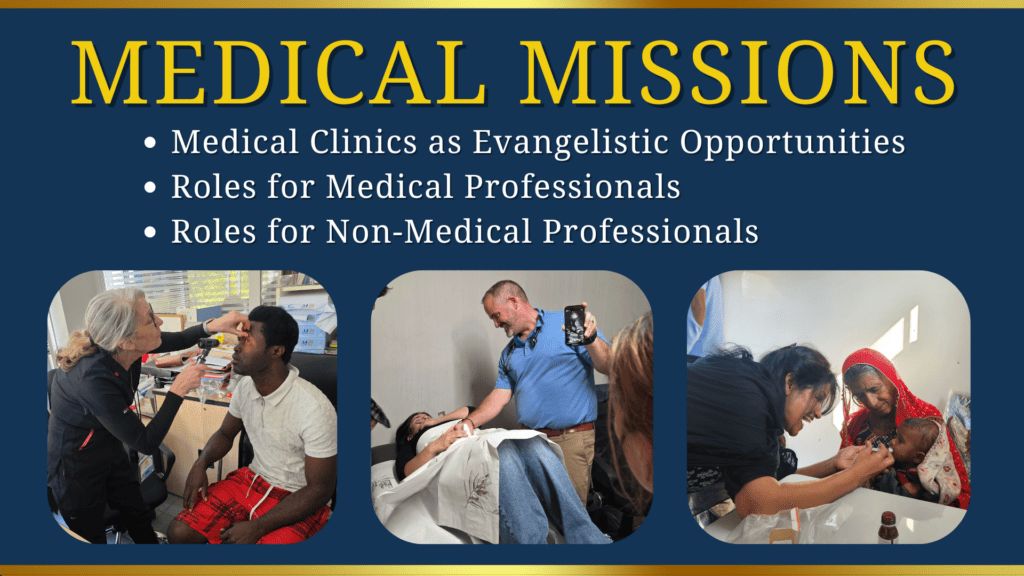
Medical Missions & Clinic Outreach on Mission Trips
Medical missions are not just about treating symptoms—they are about revealing the compassion of Christ through skilled, humble service. God uses medical care as both a doorway to physical healing and a bridge to spiritual hope.
“We loved you so much that we shared with you not only God’s Good News but our own lives, too.” — 1 Thessalonians 2:8
Medical missions allow believers to serve with excellence, dignity, and love, trusting God to bring healing—both seen and unseen.
What Medical Missions Are
Medical missions are the intentional use of healthcare skills and compassionate service to meet physical, emotional, and spiritual needs while freely sharing the hope of the Gospel. On a mission trip, medical care becomes ministry—rooted in service, prayer, and reliance on the Holy Spirit rather than systems, productivity, or performance.
“Heal the sick… and tell them, ‘The kingdom of God has come near to you.’” — Luke 10:9
Through medical clinic outreach, teams:
-
Provide care to people with little or no access to healthcare
-
Offer prayer, encouragement, and the Gospel
-
Demonstrate Christ’s love through action and presence
1. Clinical Care as Ministry
What it is:
Clinical care as ministry is the practice of medicine, nursing, therapy, and emergency care as an act of worship and obedience to Christ.
What it looks like on a mission trip:
-
Treating acute and chronic conditions in clinic settings
-
Providing preventative care and health education
-
Praying with patients and families
-
Sharing the Gospel freely and respectfully
-
Serving without charting, billing, or productivity pressures
Why it matters:
-
Physical care opens hearts to spiritual truth
-
Many patients have never been seen, heard, or touched with dignity
-
Medical compassion reflects the heart of Jesus
Helful Guidelines:
-
Serve with humility and cultural sensitivity
-
See every patient as created in God’s image
-
Trust God with outcomes, both medical and spiritual
2. Roles for Medical Professionals
Medical missions thrive when every skill set is valued and utilized. On WMA teams, medical professionals practice medicine as ministry.
Medical Providers (Physicians, Nurse Practitioners, Physician Assistants):
-
Perform patient evaluations and diagnoses
-
Prescribe and dispense medications as available
-
Offer preventative care and patient education
-
Pray with patients and share the Gospel
-
Mentor students and less-experienced clinicians
Nurses:
-
Perform triage and vital signs
-
Assist with procedures and medication distribution
-
Provide patient education and follow-up instructions
-
Offer compassionate presence and prayer
Mental Health Professionals (Counselors, Therapists, Psychologists):
-
Provide emotional and trauma-informed care
-
Address anxiety, grief, depression, and crisis situations
-
Offer spiritual encouragement and hope
-
Support both patients and team members
Physical Therapists:
-
Evaluate and treat musculoskeletal conditions
-
Teach exercises and mobility strategies
-
Improve function and quality of life
-
Educate patients and families on injury prevention
EMTs & Emergency Responders:
-
Assist with triage and urgent care needs
-
Provide wound care and emergency response
-
Support clinic safety and preparedness
-
Serve as flexible clinical support
Pharmacists (when available):
-
Assist with medication preparation and education
-
Ensure safe dosing and patient understanding
3. Roles for Non-Medical Team Members
Medical missions would not function without faithful non-medical team members. Their service creates order, safety, and hospitality.
Administrative & Intake Support:
-
Patient registration and flow coordination
-
Organizing charts, forms, and patient numbers
-
Assisting with translation coordination
Clinic Setup & Tear Down:
-
Preparing clinic spaces and equipment
-
Setting up waiting areas and prayer stations
-
Packing and restoring supplies at the end of the day
Crowd & Flow Management:
-
Directing patients through clinic stations
-
Managing lines and maintaining calm, respectful order
-
Assisting elderly, children, and those with disabilities
Prayer & Spiritual Support:
-
Praying with patients before or after care
-
Offering encouragement and listening ears
-
Supporting evangelism efforts alongside clinical care
Logistics & Support Roles:
-
Supply management and restocking
-
Team hospitality and support
-
Community engagement and relationship building
Why these roles matter:
-
They allow medical professionals to focus on care
-
They create a welcoming, dignified environment
-
They embody servant leadership
“Whatever you do, work at it with all your heart, as working for the Lord.” — Colossians 3:23
4. Medical Clinics as Evangelistic Opportunities
Medical clinics are often the first point of contact between the mission team and the community.
What it looks like:
-
Patients coming for care but receiving prayer and hope
-
Gospel conversations happening naturally and respectfully
-
Referrals to local churches or ongoing ministry
Why it matters:
-
People are open when their needs are met with compassion
-
Medical care builds trust quickly
-
The Gospel is demonstrated, not just spoken
Helpful guidelines:
-
Never force faith, but always offer hope
-
Listen before speaking
-
Let love lead every interaction
Mission trips to the following countries include this ministry opportunity. Click on the country to find out more about our next mission trip there and how you can be a part of it:
Mexico, Egypt, Thessaloniki Greece, Argentina, Thailand, Vietnam, Kazakhstan, Caribbean Nation
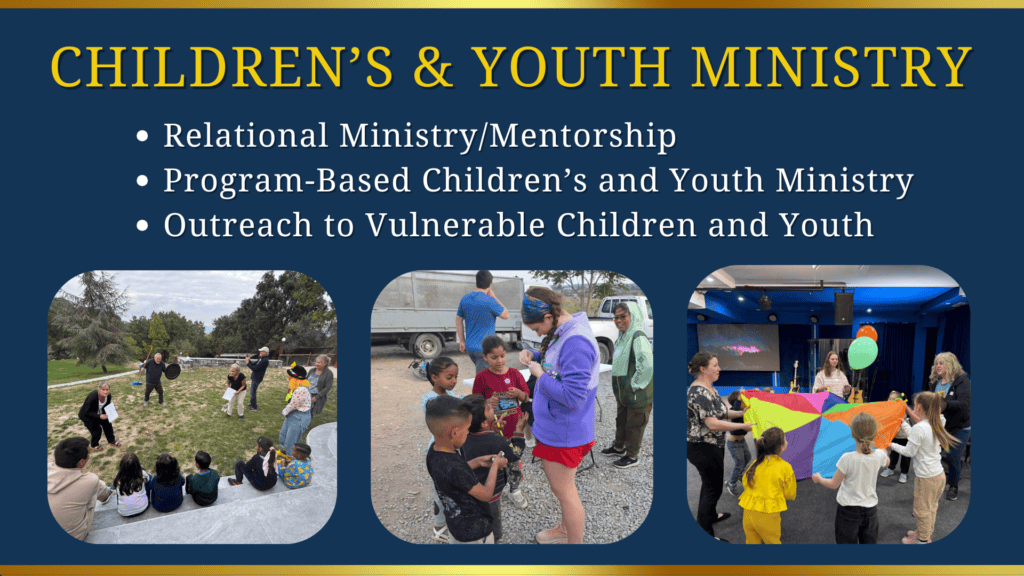
Children’s and Youth Ministry on Mission Trips
Children and youth ministry is one of the most natural and impactful ministry opportunities we encounter on mission trips. Wherever we go, we meet children and young people who are open, curious, and deeply in need of love, guidance, and hope. These encounters happen everywhere—at churches, in the streets and public parks, during medical clinic outreaches, at schools, and within impoverished villages and refugee camps. In many locations, we also host children’s ministry camps and, at times, youth services designed to encourage and equip young people.
Children’s and youth ministry is not limited to those with teaching experience or extroverted personalities. On a mission trip, everyone can participate—through presence, prayer, mentorship, encouragement, games, listening, and simply showing consistent care. God uses ordinary interactions to make an extraordinary impact in the lives of young people.
1. Relational Ministry & Mentorship
What it is:
Building intentional, Christ-centered relationships with children and youth through presence, consistency, and care. Mentorship focuses on walking alongside young people, modeling faith, character, and hope.
What it looks like on a mission trip:
-
Spending time talking, listening, and playing with children and youth
-
Encouraging young people through words of affirmation and prayer
-
Modeling kindness, patience, and integrity through everyday actions
-
Offering guidance and hope, even through brief but meaningful interactions
-
Being a safe, positive example of Christ’s love
Why it matters:
-
Many children and youth lack consistent, Godly role models
-
Mentorship builds trust and opens hearts to the Gospel
-
Even short-term relationships can leave long-term spiritual impressions
-
It reflects Jesus’ example of valuing and welcoming children
Helpful guidelines:
-
Be present and approachable
-
Listen more than you speak
-
Lead by example
-
Trust God with the impact, even when time is short
“Let no one despise your youth, but set the believers an example in speech, in conduct, in love, in faith, in purity.” — 1 Timothy 4:12
2. Program-Based Children’s and Youth Ministry
What it is:
Organized ministry activities designed to teach biblical truth, encourage spiritual growth, and create joyful, safe spaces for children and youth.
What it looks like on a mission trip:
-
Hosting children’s ministry camps with worship, Bible stories, games, and crafts
-
Participating in youth services focused on worship, teaching, and testimony
-
Assisting with Sunday school, Vacation Bible School–style programs, or school outreaches
-
Supporting local church leaders in discipling their children and youth
Why it matters:
-
It provides structured opportunities to share the gospel
-
Children and youth learn best through creativity, repetition, and relationship
-
It strengthens and supports the ongoing ministry of local churches
-
It plants seeds of faith that can grow for a lifetime
Helpful guidelines:
-
Be flexible and servant-hearted
-
Partner humbly with local leaders
-
Focus on connection, not performance
-
Trust God to work through simple efforts
“Train up a child in the way he should go; even when he is old he will not depart from it.” — Proverbs 22:6
3. Outreach to Vulnerable Children and Youth
What it is:
Ministering to children and young people in difficult circumstances, including poverty, displacement, trauma, and instability.
What it looks like on a mission trip:
-
Engaging children in impoverished villages and refugee camps
-
Offering compassion and encouragement at medical clinic outreaches
-
Playing, praying, and listening to children in the streets and public spaces
-
Showing dignity and care to youth who may feel overlooked or forgotten
Why it matters:
-
Vulnerable children often experience fear, loss, and insecurity
-
Simple acts of love can restore dignity and hope
-
It demonstrates God’s heart for the marginalized
-
It reminds children and youth that they are seen and valued by God
Helpful guidelines:
-
Be gentle, respectful, and culturally sensitive
-
Avoid making promises you cannot keep
-
Serve with humility and compassion
-
Let love be the message
“Whoever welcomes one such child in my name welcomes me.” — Matthew 18:5
Mission trips to the following countries include this ministry opportunity. Click on the country to find out more about our next mission trip there and how you can be a part of it:
Israel, Athens Greece, Mexico, Egypt, Thessaloniki Greece, Argentina, Thailand, Vietnam, Kazakhstan, Caribbean Nation
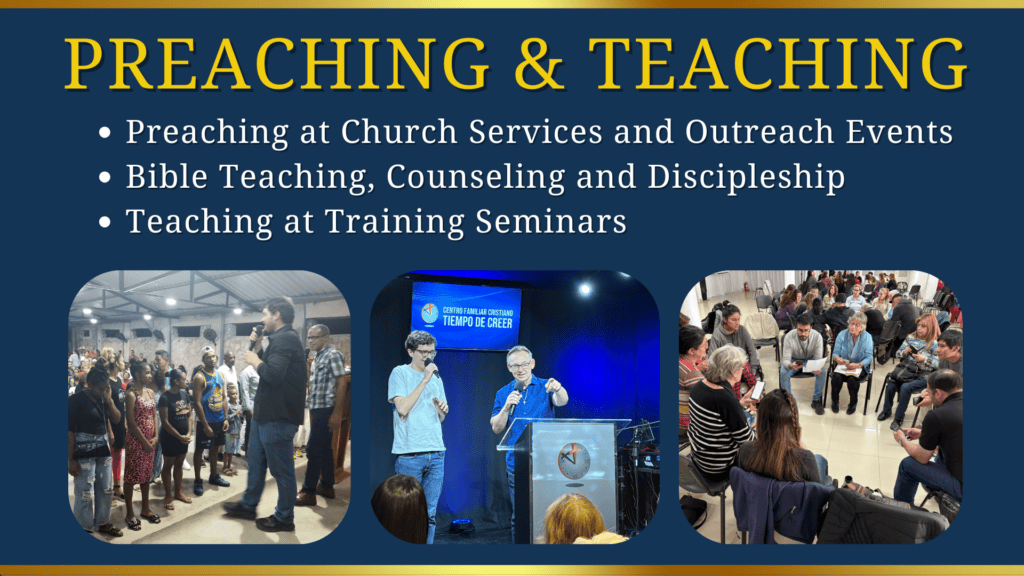
Preaching and Teaching on Mission Trips
Preaching and teaching are vital ministry opportunities on mission trips and play a central role in strengthening the Church and advancing the Gospel. Through preaching, Bible teaching, and discipleship, God’s Word is proclaimed clearly and powerfully to believers and non-believers alike. These opportunities arise in many settings, including church services, outreach events, leadership gatherings, training seminars, and informal teaching moments throughout the trip.
Preaching and teaching ministry is not limited to pastors or professional speakers. While some are called to preach publicly, others participate by teaching small groups, sharing testimonies, assisting in discipleship, supporting training sessions, offering Biblical counsel, or praying behind the scenes. Together, the team helps equip the body of Christ and build a strong biblical foundation for lasting impact.
1. Preaching the Gospel
What it is:
The public proclamation of God’s Word, centered on the gospel of Jesus Christ, calling people to faith, repentance, and transformation.
What it looks like on a mission trip:
-
Preaching during church services in partnership with local congregations
-
Sharing the gospel at outreach events, crusades, and community gatherings
-
Preaching in open-air settings, villages, and public spaces
-
Supporting altar calls and prayer ministry following the message
Why it matters:
-
Faith comes by hearing the Word of God
-
Preaching invites people to respond to the gospel personally
-
It strengthens believers and encourages spiritual growth
-
It unifies the Church around Biblical truth
Helpful guidelines:
-
Dependence on the Holy Spirit
-
Faithfulness to Scripture
-
Humility and respect for local leadership
-
Clear and simple communication
- Avoid deep theological topics – our main message is salvation through Christ
- Avoid politics
“How, then, can they call on the one they have not believed in? And how can they believe in the one of whom they have not heard?” — Romans 10:14
2. Bible Teaching & Discipleship
What it is:
Intentional instruction in God’s Word that helps believers grow in understanding, obedience, and spiritual maturity.
What it looks like on a mission trip:
-
Teaching Bible lessons in churches, small groups, and home fellowships
-
Leading discipleship sessions for new believers
-
Teaching foundational doctrines and spiritual disciplines
-
Walking alongside believers through discussion, prayer, and mentorship
Why it matters:
-
Teaching grounds believers in truth and guards against false doctrine
-
Discipleship helps Christians grow in faith and obedience
-
It equips believers to live out the Gospel daily
-
It encourages multiplication as disciples make disciples
Helpful guidelines:
-
Teach with clarity and patience
-
Be relational, not just informational
-
Encourage questions and dialogue
-
Model what you teach
“Go therefore and make disciples of all nations…teaching them to observe all that I have commanded you.” — Matthew 28:19–20
3. Pastor & Church Leadership Training
What it is:
Equipping pastors, church leaders, and ministry workers with Biblical teaching, practical tools, and spiritual encouragement to strengthen the local Church.
What it looks like on a mission trip:
-
Teaching at pastor and church leadership training seminars
-
Providing Biblical instruction on preaching, discipleship, and church health
-
Offering encouragement and prayer to weary leaders
-
Creating space for discussion, mentorship, and mutual learning
Why it matters:
-
Strong churches are built on strong, Biblically grounded leadership
-
Training multiplies impact far beyond the mission trip
-
It supports and honors the work of local leaders
-
It fosters unity and partnership within the global Church
Helpful guidelines:
-
Servant leadership and humility
-
Respect for cultural context and local authority
-
Willingness to learn as well as teach
-
Commitment to Biblical faithfulness
“And what you have heard from me in the presence of many witnesses entrust to faithful men, who will be able to teach others also.” — 2 Timothy 2:2
4. Biblical Counseling & Soul Care (Non-Medical)
What it is:
Biblical counseling is the ministry of applying God’s Word to the struggles of life in order to bring encouragement, correction, hope, and spiritual growth. It is distinct from medical or clinical mental health counseling and focuses on Scripture, prayer, and the transforming work of the Holy Spirit.
What it looks like on a mission trip:
-
Listening compassionately to individuals facing personal, relational, or spiritual struggles
-
Offering Scripture-based encouragement, prayer, and guidance
-
Walking with believers through repentance, forgiveness, grief, fear, or hardship
-
Supporting pastoral care needs in partnership with local church leaders
-
Praying with individuals and families for healing, wisdom, and peace
Why it matters:
-
God’s Word brings truth, hope, and comfort to broken hearts
-
Biblical counseling helps believers respond to life’s challenges with faith and obedience
-
It strengthens spiritual maturity and reliance on Christ
-
It supports the pastoral care ministry of the local Church
Helpful guidelines:
-
Compassion, humility, and patience
-
Faithfulness to Scripture
-
Awareness of personal limitations and boundaries
-
Willingness to refer individuals to local pastors or appropriate medical professionals when needed
“All Scripture is breathed out by God and profitable for teaching, for reproof, for correction, and for training in righteousness.” — 2 Timothy 3:16
Mission trips to the following countries include this ministry opportunity. Click on the country to find out more about our next mission trip there and how you can be a part of it:
Israel, Athens Greece, Mexico, Egypt, Thessaloniki Greece, Argentina, Thailand, Vietnam, Kazakhstan, Caribbean Nation
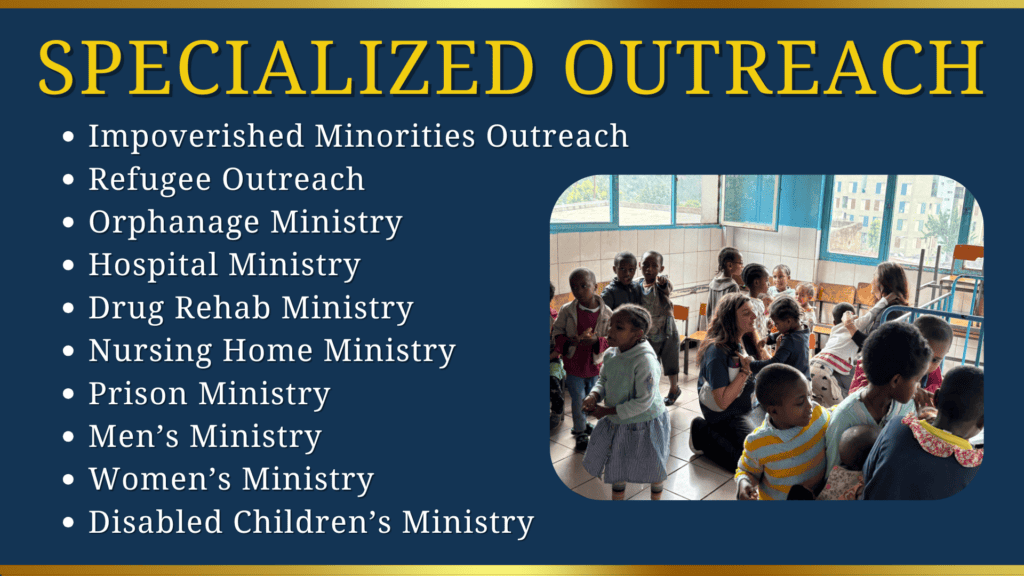
Specialized Ministry Outreaches on Mission Trips
Mission trips often provide unique opportunities to minister to people in highly specific and vulnerable contexts. These specialized ministry outreaches allow teams to bring the love of Christ into places that are frequently overlooked or difficult to access. Whether serving marginalized communities, institutional settings, or targeted groups, each outreach reflects God’s heart for compassion, dignity, and redemption. While the settings may differ, the posture remains the same—humble service, faithful presence, and dependence on the Holy Spirit.
Impoverished Minorities Outreach
What it looks like on a mission trip:
Engaging marginalized communities through prayer, practical assistance, relationship-building, and gospel-centered encouragement.
Why it matters:
It affirms the dignity and value of people often excluded or neglected and demonstrates God’s justice and love in tangible ways.
Helpful guidelines:
Humility, respect, and cultural sensitivity.
“Defend the oppressed.” — Isaiah 1:17
Mission trips to the following countries include this ministry opportunity. Click on the country to find out more about our next mission trip there and how you can be a part of it:
Israel, Athens Greece, Mexico, Egypt, Thessaloniki Greece, Argentina, Thailand, Vietnam, Kazakhstan, Caribbean Nation
Refugee Outreach
What it looks like on a mission trip:
Ministering to displaced individuals and families through presence, practical help, listening, prayer, and sharing hope in Christ.
Why it matters:
Refugees often carry deep trauma, loss, and uncertainty, and the gospel offers lasting hope and restoration.
Helpful guidelines:
Compassion, patience, and gentleness.
“I was a stranger and you welcomed me.” — Matthew 25:35
Mission trips to the following countries include this ministry opportunity. Click on the country to find out more about our next mission trip there and how you can be a part of it:
Athens Greece, Egypt, Thessaloniki Greece, Caribbean Nation
Orphanage Ministry
What it looks like on a mission trip:
Spending time with children through play, teaching, prayer, and consistent expressions of care and love.
Why it matters:
Children without families need reassurance that they are seen, valued, and deeply loved by God.
Helpful guidelines:
Faithfulness, kindness, and emotional sensitivity.
Mission trips to the following countries include this ministry opportunity. Click on the country to find out more about our next mission trip there and how you can be a part of it:
Hospital Ministry
What it looks like on a mission trip:
Praying for patients, encouraging families, and supporting medical staff with compassion and hope.
Why it matters:
Illness often opens hearts to spiritual truth and highlights the need for God’s healing and peace.
Helpful guidelines:
Gentleness, discretion, and prayerful attentiveness.
Mission trips to the following countries include this ministry opportunity. Click on the country to find out more about our next mission trip there and how you can be a part of it:
Drug Rehab Ministry
What it looks like on a mission trip:
Sharing testimonies, teaching Biblical truth, and praying with individuals pursuing recovery and transformation.
Why it matters:
The Gospel offers freedom, identity, and lasting change beyond addiction.
Helpful guidelines:
Grace, honesty, and encouragement.
“If the Son sets you free, you will be free indeed.” — John 8:36
Mission trips to the following countries include this ministry opportunity. Click on the country to find out more about our next mission trip there and how you can be a part of it:
Nursing Home Ministry
What it looks like on a mission trip:
Visiting residents through conversation, worship, prayer, and expressions of honor and care.
Why it matters:
Many elderly individuals experience loneliness and need reassurance of their worth and God’s nearness.
Helful guidelines:
Patience, honor, and attentiveness.
Mission trips to the following countries include this ministry opportunity. Click on the country to find out more about our next mission trip there and how you can be a part of it:
Prison Ministry
What it looks like on a mission trip:
Teaching Scripture, sharing the Gospel, and offering prayer and encouragement to incarcerated individuals.
Why it matters:
God’s grace reaches beyond all past mistakes and offers redemption and new life.
Helpful guidelines:
Nonjudgmental love and humility.
“Remember those in prison as if you were together with them.” — Hebrews 13:3
Mission trips to the following countries include this ministry opportunity. Click on the country to find out more about our next mission trip there and how you can be a part of it:
Men’s Ministry
What it looks like on a mission trip:
Facilitating gatherings focused on biblical leadership, integrity, discipleship, and responsibility.
Why it matters:
Strong, Godly men positively influence families, churches, and communities.
Helful guidelines:
Authenticity, accountability, and servant leadership.
Mission trips to the following countries include this ministry opportunity. Click on the country to find out more about our next mission trip there and how you can be a part of it:
Israel, Athens Greece, Mexico, Egypt, Thessaloniki Greece, Argentina, Thailand, Vietnam, Kazakhstan, Caribbean Nation
Women’s Ministry
What it looks like on a mission trip:
Hosting gatherings for teaching, prayer, encouragement, and relational ministry among women.
Why it matters:
Women often carry significant burdens and need space for healing, affirmation, and spiritual growth.
Helpful guidelines:
Empathy, trustworthiness, and respect.
Mission trips to the following countries include this ministry opportunity. Click on the country to find out more about our next mission trip there and how you can be a part of it:
Israel, Athens Greece, Mexico, Egypt, Thessaloniki Greece, Argentina, Thailand, Vietnam, Kazakhstan, Caribbean Nation
Disabled Children’s Ministry
What it looks like on a mission trip:
Engaging children with disabilities through individualized attention, play, prayer, and unconditional love.
Why it matters:
It affirms the God-given worth of every child and reflects Christ’s heart for the vulnerable.
Helpful guidelines:
Patience, gentleness, and honor.
“Let the little children come to me.” — Matthew 19:14
Mission trips to the following countries include this ministry opportunity. Click on the country to find out more about our next mission trip there and how you can be a part of it:
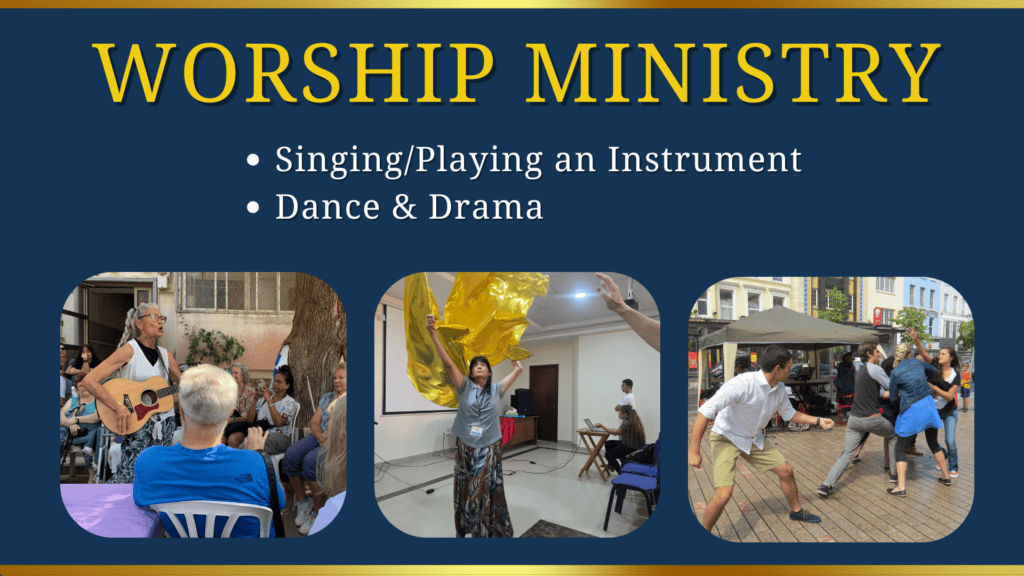
Worship Ministry on Mission Trips
Worship ministry is a powerful and unifying ministry opportunity on mission trips. Through singing, playing instruments, and expressive worship such as dance and drama, teams have the privilege of leading people into the presence of God and proclaiming biblical truth in creative and accessible ways. Worship often transcends language, culture, and background, allowing hearts to connect with God even when words are limited.
On mission trips, worship ministry takes place in many settings—church services, outreach events, open-air gatherings, schools, refugee camps, villages, and informal moments of prayer and fellowship. Whether leading from a platform or worshiping in a simple, spontaneous setting, worship ministry creates space for God to move, comfort, heal, and draw people to Himself.
1. Musical Worship (Singing & Playing Instruments)
What it is:
Using voice and musical instruments to lead others in praise, thanksgiving, and devotion to God, grounded in Scripture and the Gospel.
What it looks like on a mission trip:
-
Leading worship during church services and outreach events
-
Supporting local worship teams through collaboration and encouragement
-
Singing in small groups, homes, hospitals, or public spaces
-
Using music as an evangelistic and discipleship tool
Why it matters:
-
Worship invites God’s presence and shifts spiritual atmospheres
-
Music helps people engage emotionally and spiritually with Biblical truth
-
It unites believers across cultures and languages
-
Worship prepares hearts to receive the Word of God
Helpful guidelines:
-
Humility and servant leadership
-
Sensitivity to the Holy Spirit
-
Respect for local worship styles and culture
-
Focus on God’s glory, not performance
“Come, let us sing for joy to the Lord.” — Psalm 95:1
2. Creative Worship (Dance & Drama)
What it is:
Expressing worship and communicating the gospel through movement, storytelling, and visual expression rooted in Biblical truth.
What it looks like on a mission trip:
-
Presenting worship dance during services and outreach events
-
Using drama and skits to illustrate Gospel messages
-
Engaging children and youth through creative expression
-
Supporting teaching and preaching through visual storytelling
Why it matters:
-
Creative worship communicates truth beyond words
-
It reaches people of all ages and learning styles
-
Dance and drama are effective in cross-cultural ministry contexts
-
Visual expression can make the Gospel more memorable and impactful
Helpful guidelines:
-
Worshipful intention, not performance
-
Modesty and cultural awareness
-
Unity with the message being presented
-
Willingness to be led and redirected by God
“Praise him with timbrel and dancing.” — Psalm 150:4
Mission trips to the following countries include this ministry opportunity. Click on the country to find out more about our next mission trip there and how you can be a part of it:
Israel, Athens Greece, Mexico, Egypt, Thessaloniki Greece, Argentina, Thailand, Vietnam, Kazakhstan, Caribbean Nation
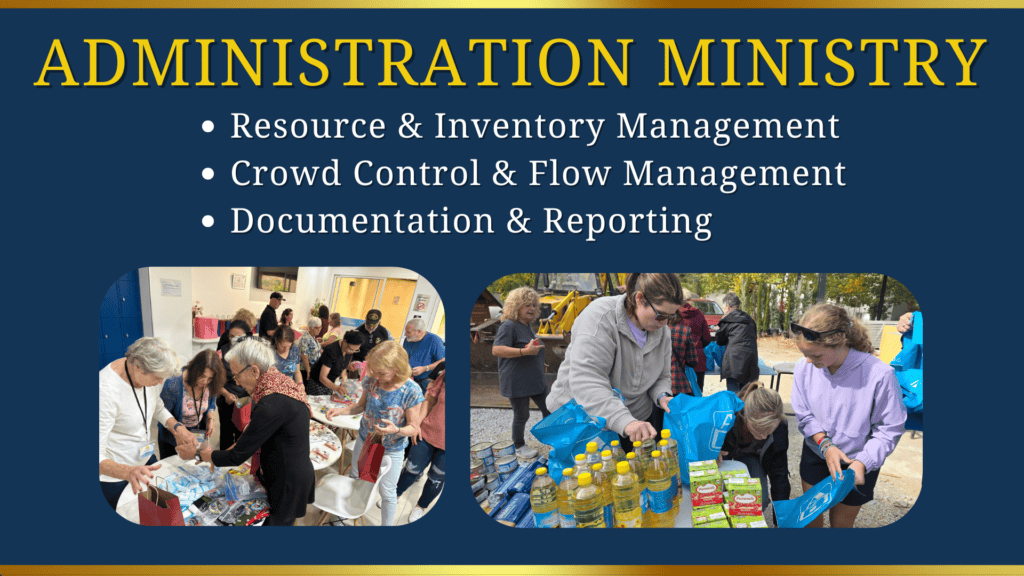
Administration as Ministry on Mission Trips
Administration is a vital and often unseen ministry opportunity on mission trips. While it may take place behind the scenes, effective administration creates the structure, safety, and order that allow every other form of ministry to function well. Through faithful planning, organization, and attention to detail, administrative ministry reflects God’s heart for stewardship, excellence, and care for people.
On a mission trip, administrative roles are not merely logistical—they are deeply spiritual. By serving in administration, team members help remove distractions, reduce confusion, and create environments where the gospel can be shared clearly and compassionately. Administrative ministry allows every team member, regardless of personality or platform, to participate meaningfully in the mission.
1. Resource & Inventory Management
What it is:
The careful organization, tracking, and distribution of supplies and materials needed for ministry activities.
What it looks like on a mission trip:
-
Managing food, water, medical supplies, Bibles, and ministry materials
-
Tracking inventory to ensure resources are used wisely and fairly
-
Preparing materials in advance for outreaches, clinics, and trainings
Why it matters:
-
It ensures resources reach the people who need them most
-
It demonstrates stewardship and accountability
-
It prevents waste, shortages, and confusion during ministry
Helpful guidelines:
-
Diligence and integrity
-
Attention to detail
-
Servant-hearted stewardship
2. Crowd Control & Flow Management
What it is:
Organizing the movement of people in a safe, respectful, and orderly manner during outreach events and ministry activities.
What it looks like on a mission trip:
-
Directing lines, seating, and entry/exit flow at clinics, services, and events
-
Assisting children, elderly individuals, and those with disabilities
-
Maintaining calm, order, and safety in large or high-need gatherings
Why it matters:
-
It protects people and reduces risk in crowded environments
-
It helps events run smoothly and on schedule
-
It creates a welcoming and respectful atmosphere
Helpful guidelines:
-
Calmness and clarity
-
Patience and kindness
-
Situational awareness and readiness to serve
3. Documentation & Reporting
What it is:
Accurately recording information related to ministry activities for accountability, follow-up, and long-term impact.
What it looks like on a mission trip:
-
Collecting attendance numbers, prayer requests, and testimonies
-
Recording decisions for Christ or requests for follow-up
-
Assisting local partners with reports and ministry records
Why it matters:
-
It helps local churches provide continued care and discipleship
-
It supports transparency and accountability
-
It preserves testimonies of what God has done
Helpful guidelines:
-
Faithfulness and accuracy
-
Respect for confidentiality and dignity
-
Commitment to serving long-term ministry goals
Mission trips to the following countries include this ministry opportunity. Click on the country to find out more about our next mission trip there and how you can be a part of it:
Israel, Athens Greece, Mexico, Egypt, Thessaloniki Greece, Argentina, Thailand, Vietnam, Kazakhstan, Caribbean Nation
SPIRITUAL GIFTS ASSESSMENT
The Bible teaches us that we have all been given spiritual gifts and strengths by God in Christ. These gifts and strengths are to be developed and used for His glory and the benefit of the world around us. The Spiritual Gifts Assessment provides insightful questions to help you discover your gifts.
Click the button below to download and print the Spiritual Gifts Assessment.